
Satoru Gojo Had to Die
A reading of Gojo’s death in Jujutsu Kaisen through power, isolation, and the story’s need to move beyond its strongest character.
Who this is for
For readers thinking about what Gojo’s death means for the story. Spoilers for the ending of Jujutsu Kaisen, characters in Jujutsu Kaisen Modulo, and The Godfather.
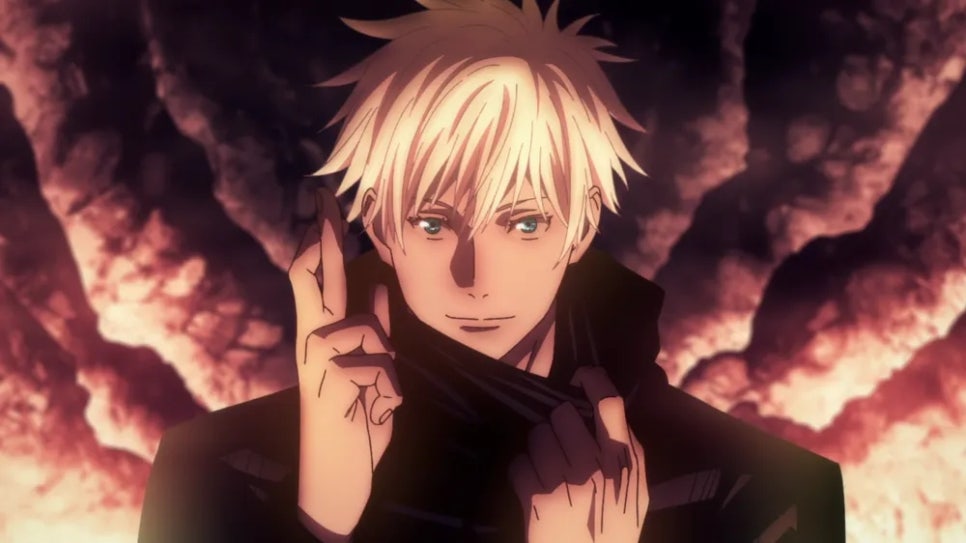
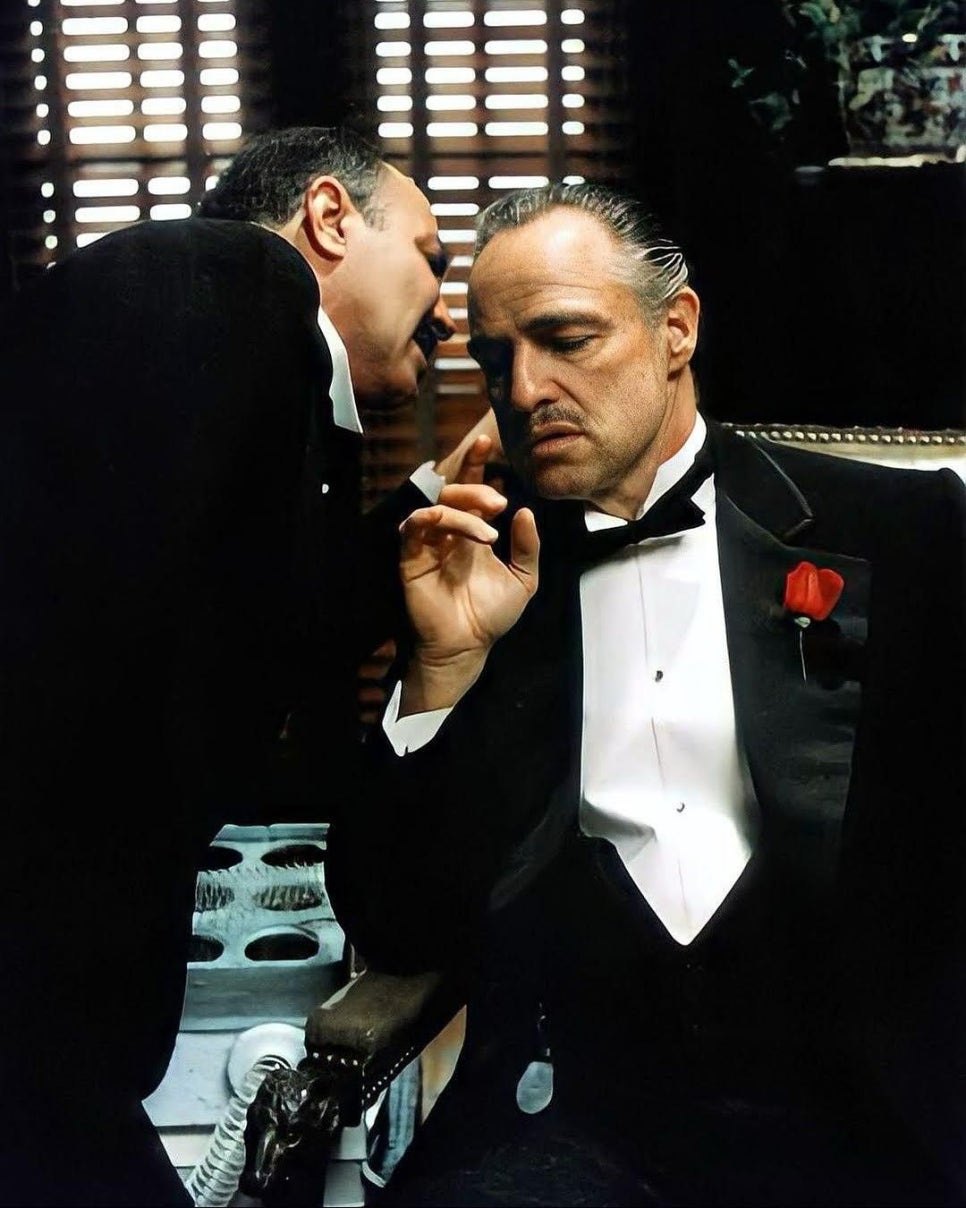
Don Corleone collapses while playing with his grandson in the garden. He dies peacefully, having stepped down from his throne. Satoru Gojo, by contrast, is cut in half on a battlefield. The distance between these deaths could hardly be greater. One completes a succession of power; the other is an event that splits a world apart. Why could Gojo not die peacefully?
Borrowing from Foucault’s thinking on power and Badiou’s philosophy of the event, I want to consider what changes after Gojo’s death. The state of exception belongs primarily to discussions of Schmitt and Agamben, so I will not present it as Foucault’s own concept. The myth of Orpheus offers another way of reading the process through death and renewal. These different frameworks meet at the same question: why must the strongest disappear?
The Don and Gojo: two faces of power
Don Corleone dies after handing his position to Michael. The family’s power survives him. Gojo’s absence instead reveals how much the jujutsu world depended on a single person. His Six Eyes and Limitless technique are overwhelming, but he does not stand outside the relationships and institutions of that world. He works within them, educating students and clashing with the higher-ups. Foucault’s view of power as something operating through relationships, rather than a possession held by an individual, encourages us to look at the dependence and conflict surrounding Gojo’s strength.
The violence of exception: Gojo as a seal
Gojo unsettles the world and its common sense merely by existing. The history of sorcerers seems divided into before and after him, and every discussion must find a way around his presence. In a Foucauldian reading, he becomes a black hole within a network of knowledge and power. It is Kenjaku and the curses who seal him in the Prison Realm. We cannot equate that literal act with the entire jujutsu establishment choosing to remove him. What is clear is that his disappearance destroys an existing balance. Badiou offers a different question: what if an event comes from a rupture in order rather than its restoration? Read this way, Gojo’s death is more than an elimination. It opens the conditions for something the old world could not accommodate.
Fact and interpretation: Kenjaku and the curses sealed Gojo. The language of a vacancy in power or an event is this essay’s philosophical interpretation.
Death as an event: Badiou meets Orpheus
For Badiou, an event marks a break that cannot be adequately described in the terms of the existing situation. Gojo’s death is not simply the strongest person falling; it is a moment when “the strongest” ceases to be a sufficient category. Yuji Itadori and Megumi Fushiguro must now invent a world without him. I read this change as loosely connected to Badiou’s truth procedure. A dramatic occurrence does not automatically establish an event or a truth in the philosophical sense. Orpheus tells the story differently. He descends into the underworld to recover Eurydice, only to lose her by looking back. Gojo’s students, too, cannot make recovering their teacher their sole purpose. They must mourn him and build a world in his absence. Death becomes a condition for renewal.
Itadori also appears in Jujutsu Kaisen Modulo, set sixty-eight years after the original story. Thinking about that continuation brings back the question of whether one strongest person can solve everything. Rather than fixing a ranking of who surpasses Gojo or declaring characters’ motives settled, I want to look at the relationships through which the next generation lives.
The logic of myth: why must the strongest disappear?
Dionysus is associated with wine and ecstasy, and some Orphic traditions tell of his dismemberment and rebirth. This cannot be reduced to a single canonical story of resurrection through wine. I read Gojo’s death through a similar structure of loss and renewal. While he lives, the jujutsu world remains fixed around a “Gojo system.” Power, as Foucault reminds us, belongs to a network of relationships. Removing that absolute center makes new forms of solidarity among younger sorcerers and new balances with their enemies possible. His death reconfigures the world rather than simply functioning as a sacrificial rite. Sukuna’s death brings that chapter to a close as well.
What the two deaths leave behind
Don Corleone’s death confirms continuity: Michael succeeds him, and the family goes on. This is not the same thing as Foucault’s disciplinary power, but it does evoke power that outlasts an individual. Gojo’s death, by contrast, is the violence of discontinuity. No one can simply replace him; the system falters, and everyone must invent new rules. Yet balance matters deeply in Jujutsu Kaisen. Gojo dies, Sukuna eventually dies, and the world arrives at a different equilibrium, preparing to give birth to another world. Through Badiou, we might read this as an opening for subject formation. Orpheus brings the two accounts together: death calls for mourning, but mourning cannot become fixation. Gojo becomes a myth through his death, and new sorcerers emerge beyond that myth. The strongest had to die so the world could move again.
“Just as Orpheus should not have looked back, we should not make Gojo’s return our wish. The story continues because he is absent.”
I read Gojo’s death as the point where a world dependent on one person must move toward new relationships. That does not make his loss any less painful. What remains is the question of what his students will carry forward, and what they will change.
Related reading
Satoru Gojo, the ordinary man (Korean draft)
Suguru Geto: broken justice (Korean draft)
Source
Essays linking here 0
No published essays link here yet.