
Ghost of Tsushima: A Review
A personal review of Ghost of Tsushima, considering its landscape, combat, historical imagination, and the price of becoming the Ghost.
Who this is for
For readers interested in the art, combat, and open-world design of Ghost of Tsushima. Discusses major characters and story developments.
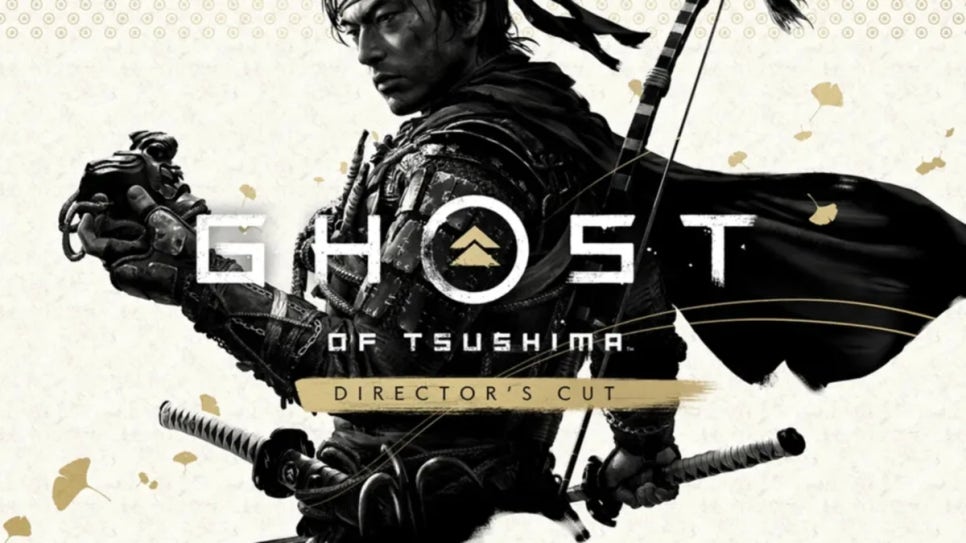
1. The studio, directors, and development
Sucker Punch’s change of direction
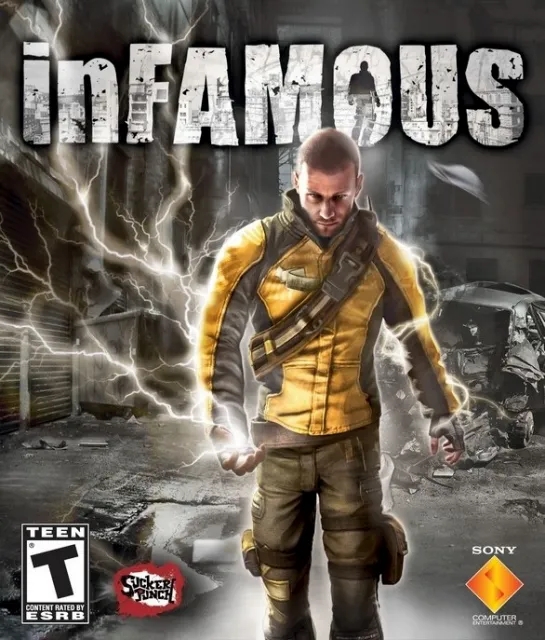
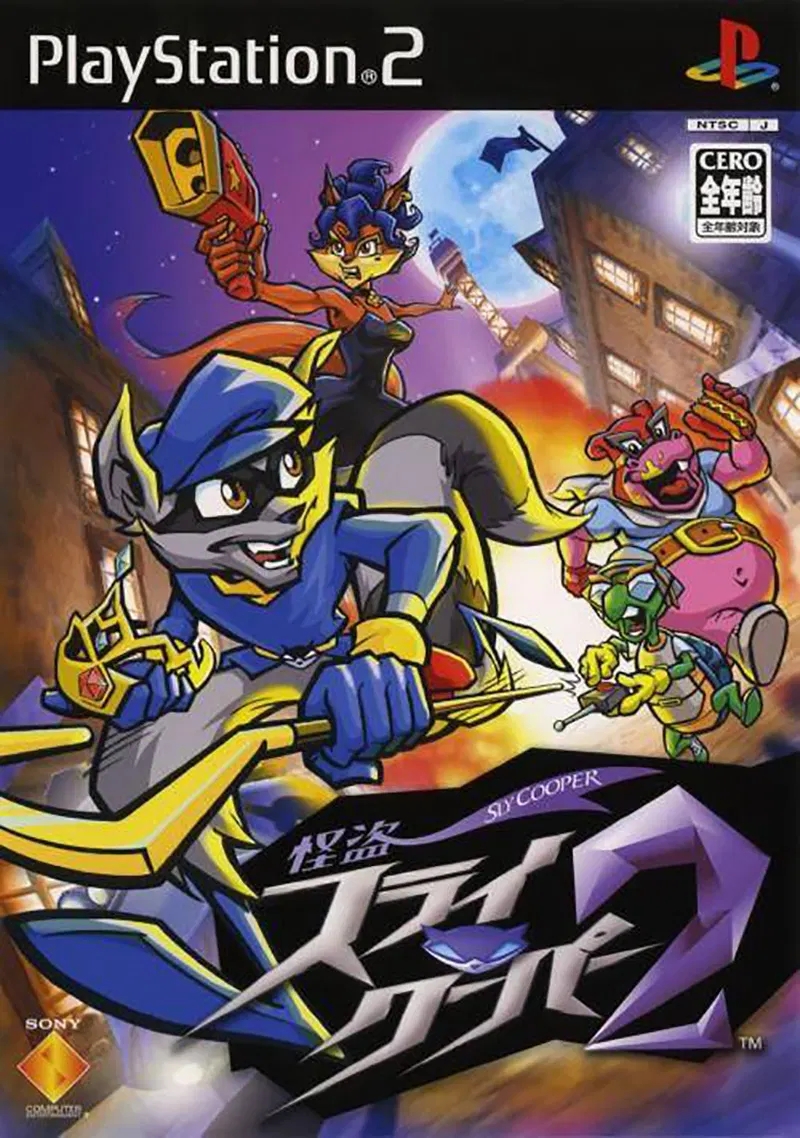
Ghost of Tsushima was developed by Sucker Punch Productions, a Sony-owned studio based in Washington State. The team had previously made its name with the cartoon heists of Sly Cooper and the superpowered open worlds of inFAMOUS.
After inFAMOUS Second Son, creative directors Nate Fox and Jason Connell pursued a large, immersive open world built around close combat. Medieval Europe and the age of pirates were familiar settings for Western studios. They instead chose Tsushima, an island on the edge of thirteenth-century Japan.

Field research and the Kurosawa estate
The developers visited Tsushima twice to research its landscape and atmosphere. They photographed its terrain and vegetation, including details such as moss on shrine steps and the movement of wind. The sound team recorded local birds, insects, and wind in the island’s forests.
As admirers of Akira Kurosawa, they also wanted a mode that reproduced the texture and sound of older black-and-white films. Sucker Punch approached Kurosawa Productions, showed footage of the game in development, and received the estate’s approval to use the name “Kurosawa Mode,” honoring the director’s cinematic legacy.
Reception in Japan and praise from the Yakuza director
Before release, the idea of a Western studio making a Japanese period drama raised concerns that it would amount to a shallow romanticization of Japan. Afterward, Yakuza series director Toshihiro Nagoshi praised its beautiful treatment of Tsushima’s nature and samurai ideals, even describing a sense of defeat at what the team had achieved.
2. Setting and story
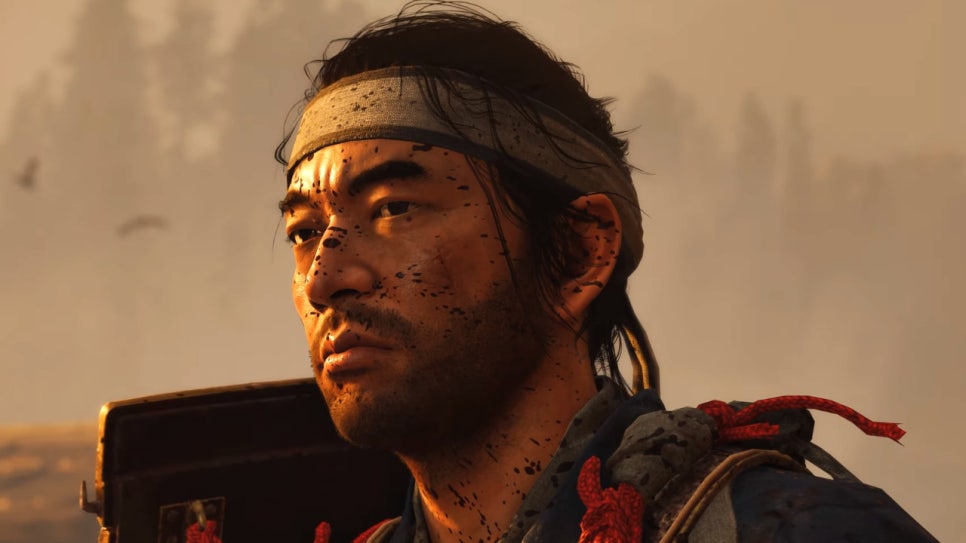
Jin Sakai, the protagonist of Ghost of Tsushima
The story is set during the first Mongol invasion of Japan in 1274, when forces of the Yuan dynasty and Goryeo attacked the islands. In the game, the ruthless Khotun Khan lands at Komoda Beach on Tsushima. Lord Shimura, the island’s jito, his nephew Jin Sakai, and roughly eighty samurai confront the invading force.
The samurai’s insistence on honor and individual combat is devastated by the invaders’ weapons and tactics, and Shimura is captured. Jin barely survives. Realizing that direct confrontation cannot defeat the larger army, he abandons the code taught by his family. Through assassination, poison, smoke bombs, and thrown blades, he becomes the feared Ghost. His struggle to save Tsushima’s people and expel the invaders draws him into a deep conflict with his uncle’s convictions.
3. Art direction and a tribute to Akira Kurosawa
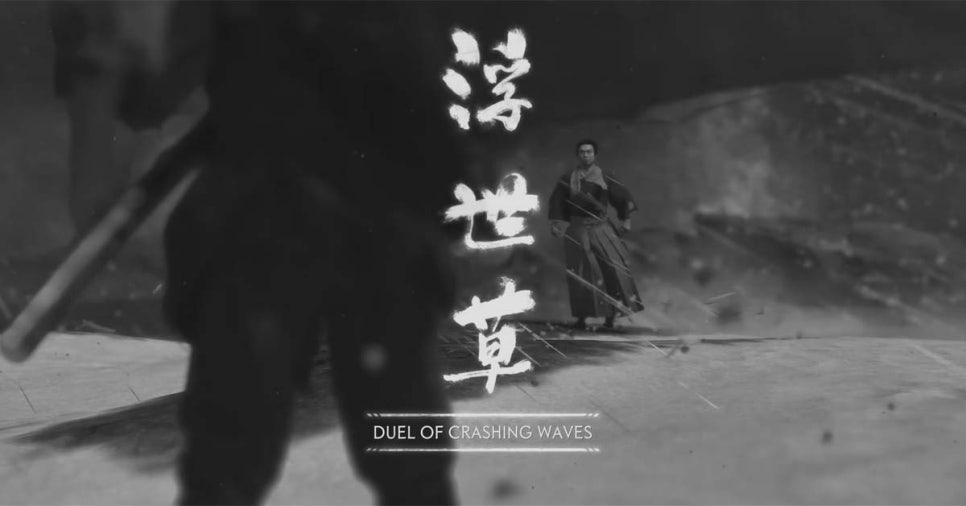
Kurosawa Mode gives the game the texture of a 1950s film.
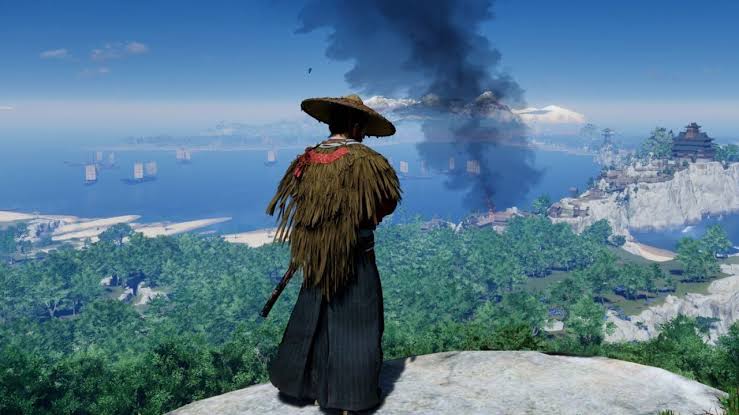
The visuals and art direction are exceptional. Waves of pampas grass spread like ink painting, red maple leaves scatter on the wind, and shrines stand quietly in dense mist. These landscapes achieve something beyond technical graphical fidelity.
Kurosawa Mode is more than a monochrome filter. It recreates the strong contrasts of period cinema, abrupt flashes of swordplay, the shadows of windblown leaves, film grain, and a deliberately muffled sound.
The minimalist guidance system stands out as well. Rather than putting arrows and a minimap over the landscape, a swipe on the controller summons wind that points toward the destination. Yellow birds lead the player toward the island’s hidden places. Exploration grows out of natural elements, sustaining visual immersion.
The swordplay is also excellent. Switching among four stances to match swordsmen, spearmen, shield-bearers, and brutes is initially enjoyable, although it becomes a limitation later. The timing and impact of deflecting an attack just before it lands deliver the essential pleasure of a sword-fighting game.
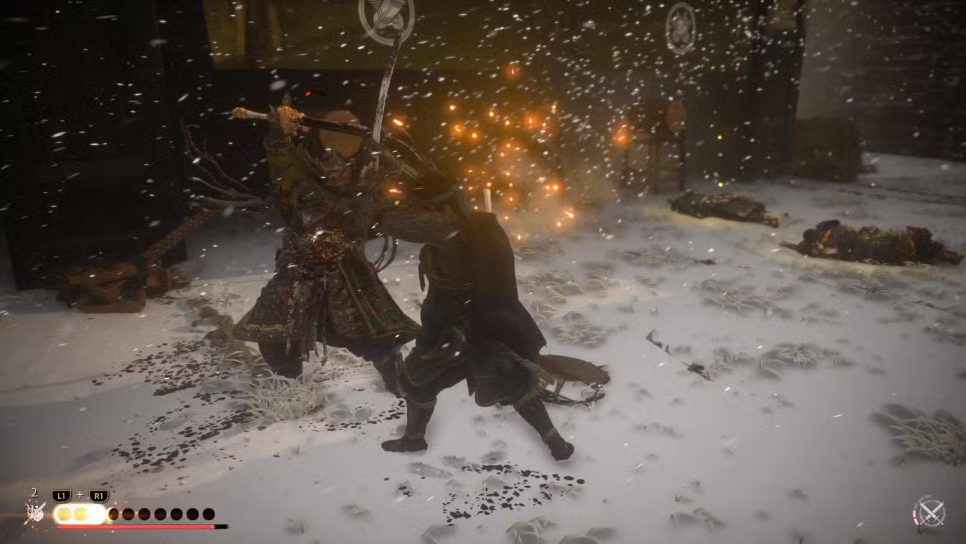
The parrying system is intuitive, and the impact feels excellent.
4. The romanticized samurai and a story that challenges him
Behind the beautiful images, there is room to question the Orientalist romance of a Western view of Japan. Historical samurai were a ruling and landholding class, not simply noble moralists. Political advantage and the survival of a house could involve deception, night attacks, and betrayal.
Yet the game cannot be dismissed as a simple glorification of bushido. Against the rigid, romanticized honor represented by Shimura, Jin and the supporting characters develop by breaking that code when it prevents them from saving people.
Jin’s conflict over placing survival before doctrine, along with the intrigues between families in the side stories, makes that challenge to an idealized samurai worldview compelling. The ending fits those themes and leaves a bitter, dignified aftertaste.
5. Systemic weaknesses that difficulty makes harder to ignore
The foundations of swordplay and parrying are strong, but the higher the difficulty, the more clearly the weaknesses of the system emerge.
A frustrating, unreliable camera: Target lock-on was added in a later update, but in my experience it does not solve the underlying problems. Indoors or among dense trees, walls and branches obscure the action. Attacks can arrive from outside the frame, creating deaths that feel unfair rather than deserved.
Limited enemy AI: Even on the highest difficulty, enemies behave predictably. A companion can be assassinated beside them, yet after Jin leaves their view for a short time they relax and return to their posts. It weakens the tension of stealth, though this is hardly a problem unique to this game.
Lifeless NPC interactions: Villagers and quest-givers often stand in fixed places repeating a small set of lines. I was not expecting the organic interactions of Red Dead Redemption 2, but I still found it difficult to shake the sense that these people were props rather than inhabitants of a living world.
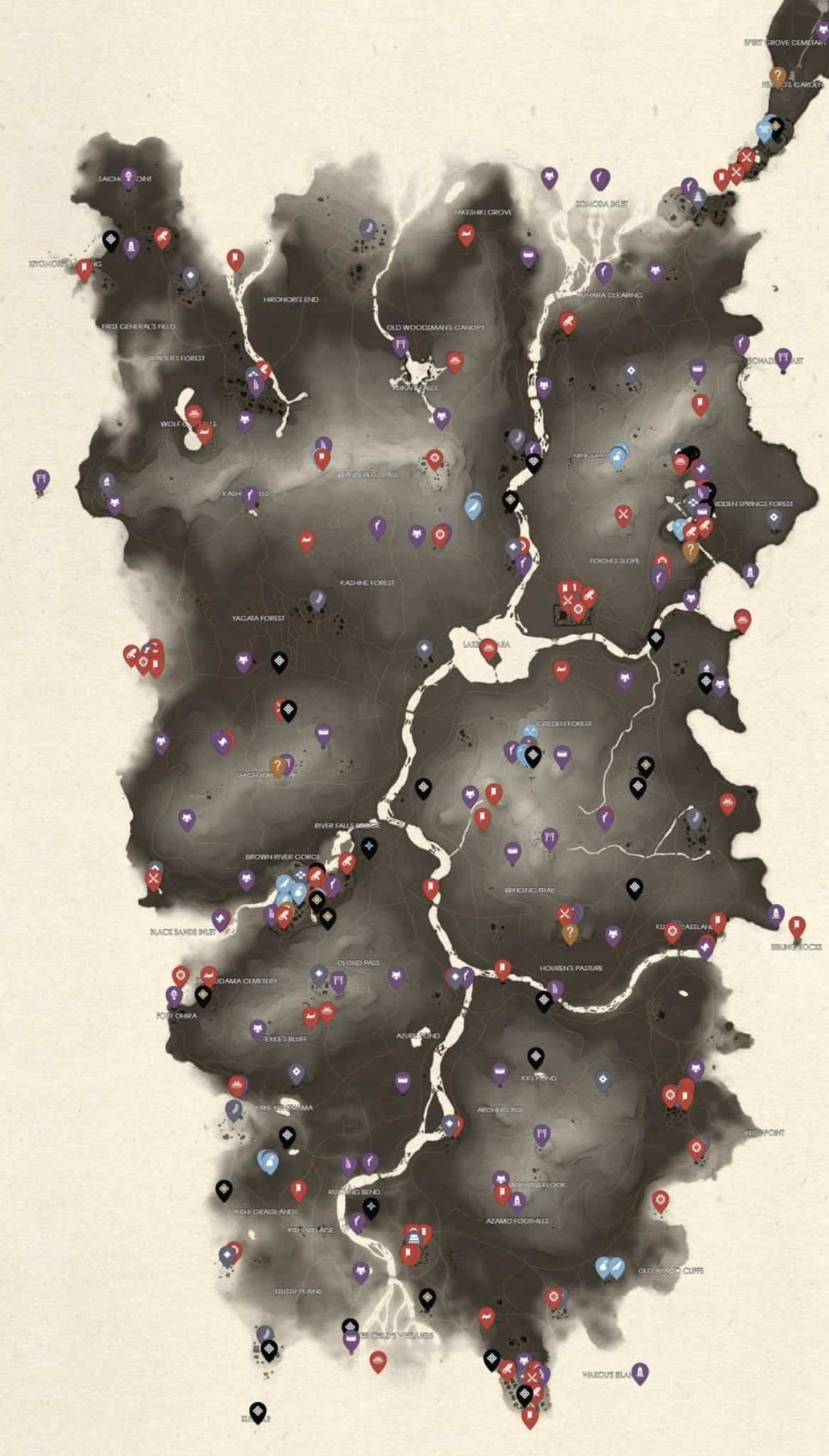
Part of the Ghost of Tsushima map
6. Repetitive open-world tasks and a predictable story
Once the wonder of the first two or three hours passes, the game settles into a familiar Ubisoft-style open-world routine.
The fatigue of repetition: Following foxes, cutting bamboo, reflecting in hot springs, and collecting banners quickly begin to feel like homework. Side quests repeatedly return to the same formula: speak to a villager, follow tracks, clear out a Mongol camp.
A conventional narrative: Jin and Shimura’s conflict over honor and the supporting characters’ revenge stories follow predictable paths. I found little in the way of surprising turns or more complicated human contradictions, and the drama lost some force toward the end. Khotun Khan has presence, but his final boss encounter feels flat by comparison.
Swords, spears, shields, and brutes: These categories, with some archers added, limit the enemy patterns. New appearances do little to change them, and the satisfying action becomes repetitive in the later stages.
7. Related games
Sekiro: Shadows Die Twice: FromSoftware’s samurai action game offers extraordinary moment-to-moment blade clashes and deflection mechanics. I finished it after 55.5 hours of play.
Assassin’s Creed Shadows: An action RPG set in feudal Japan, contrasting assassin and samurai play within Ubisoft’s territory-clearing open-world structure. I have not played it.
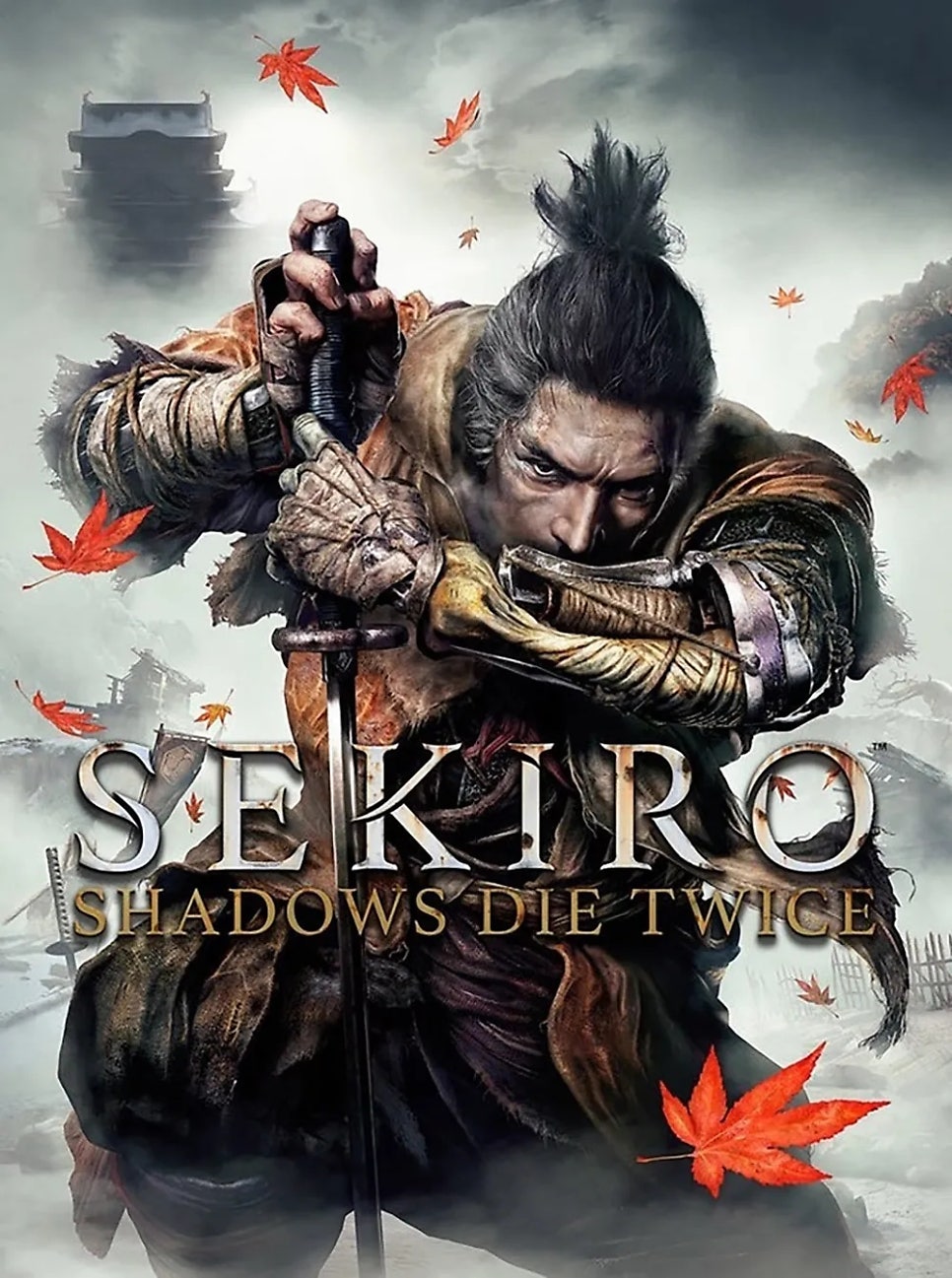
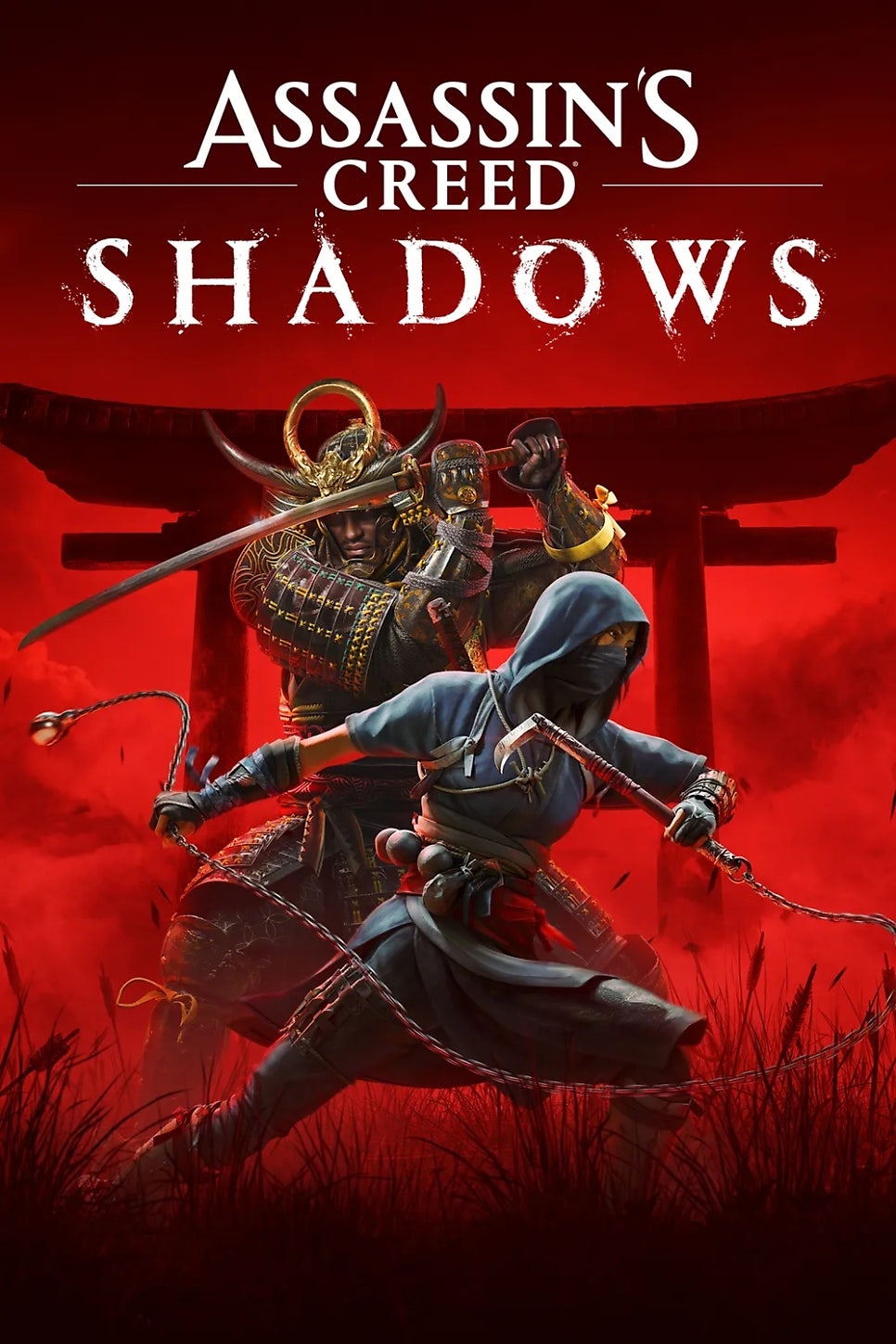
Sekiro and Assassin’s Creed Shadows
8. My ratings and overall assessment
Ghost of Tsushima is a visual achievement, with a captivating tribute to Kurosawa, extraordinary landscapes, and disciplined, satisfying swordplay. Beneath its beautiful image and sound, however, lie repetitive map-clearing tasks, limited AI, and an awkward camera. Players who value atmosphere, visual richness, and direct parry-based combat will find much to enjoy. Those looking for a more complex narrative or sophisticated systems may be left with familiarity and fatigue.
|
Category |
Score |
Assessment |
|
1. Graphics and art |
★★★★⯨ 4.5 |
Impressive visual fidelity for its time, with landscapes and color used to striking aesthetic effect. An excellent homage to Kurosawa. |
|
2. Controls and UI |
★★★★☆ 4.0 |
The wind-based guidance is inspired, but the camera becomes frustrating in confined spaces. |
|
3. Story |
★★★⯨☆ 3.5 |
A familiar revenge narrative and conflict over honor. Character arcs and developments often follow recognizable conventions. |
|
4. Sound and music |
★★★☆☆ 3.0 |
Grand music drawing on Japanese instruments and strong location recordings, though few musical moments stayed deeply with me. |
|
5. Gameplay |
★★★☆☆ 3.0 |
Stance switching and parrying are absorbing at first, but the limited enemy types, repeated quests, and AI weaknesses soon make play feel routine. |
|
Overall |
★★★⯨☆ 3.6 / 5.0 |
The early appeal of stance switching and parrying fades as restricted enemy types, repetitive tasks, and limited AI make combat feel familiar. |
|
Playtime |
53.8 hours |
Main story and major supporting-character quests completed; all skills unlocked; 58% of Steam achievements earned. |
*These ratings reflect my personal criteria.
History and fiction
The setting draws on the Mongol invasion of 1274, but Jin Sakai and Khotun Khan’s story is fictional. The developers also discuss their choices between historical representation and cinematic storytelling.
Essays linking here 0
No published essays link here yet.