
Tacitum: A Name for Silent Being
Tacitum is a working concept for nature’s silent existence beyond human observation, developed alongside questions of media, matter, and resource politics.
Who this is for
For readers interested in The Spell of the Sensuous, the materiality of media, and how the concepts behind my work take shape. Tacitum and the five terms below are working concepts proposed in this essay.
The earth behind the screen: rethinking affect, from Tacitum to Geo-Hierarchy
We live behind walls of screens and signs. The world built from text is solid, but its price has been a loss of feeling for the living earth beneath our feet. We have forgotten that the body was once our most sensitive means of speaking with nature.
Yet one doubt keeps returning whenever I read discussions about recovering our sensory relationship with the earth. It concerns the word “affect” itself. As routinely used in aesthetics and philosophy, it sometimes makes nature seem like a passive object that only comes alive, or acquires a presence, through human mediation.
Nature exists whether or not a human being looks at it. I question the habit of explaining nature only within the limits of human sensation. Tacitum is the name I have given to the question that follows.
David Abram’s evocation of the embodied language of oral cultures in The Spell of the Sensuous deserves a careful hearing. But I prefer to read that language before writing through Walter Benjamin’s idea of Adamic language. Adam’s naming was not the attachment of labels. It was a response that translated the voiceless language of things into sound. After the Fall, however, things became overnamed: hundreds of names were layered over them in place of a single true name. In my reading of Benjamin, nature falls silent both because it has lost speech and because it has been named too much. A civilization that forgets nature’s self-sufficient reality, then ceaselessly names it through human language and the rhetoric of affect, helps produce that silence.
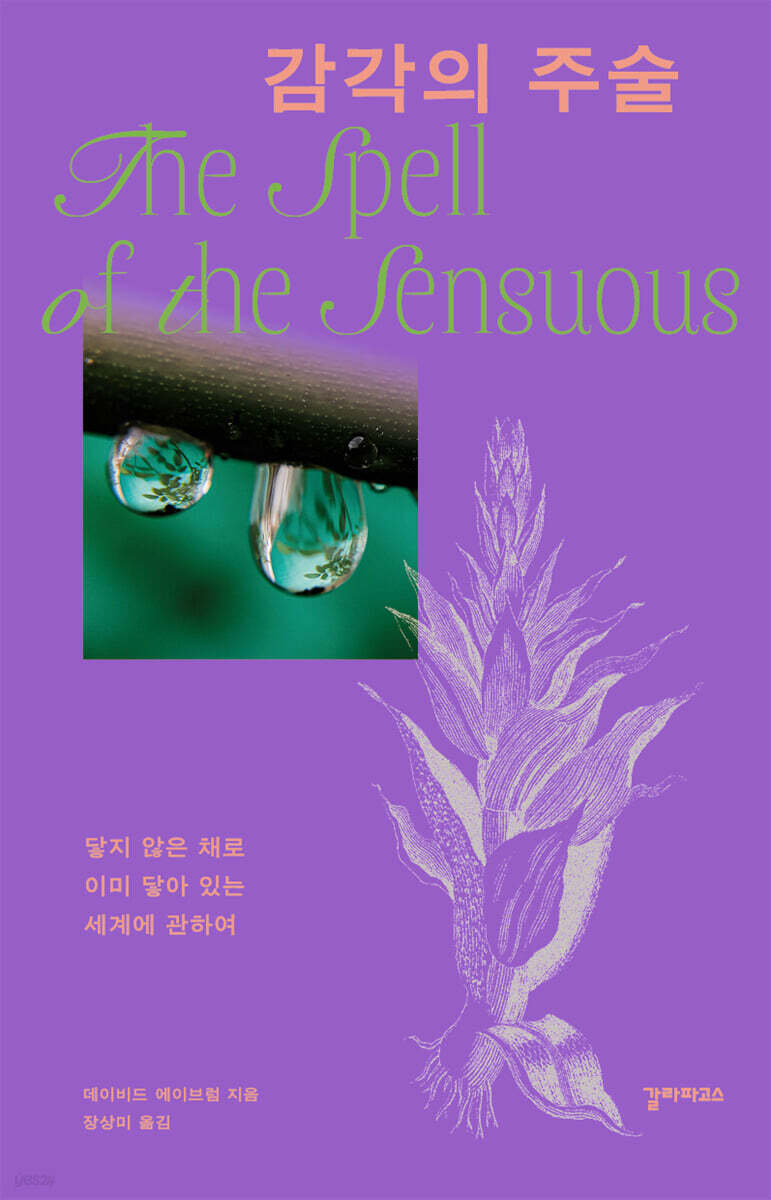
Earlier essay: The Spell of the Sensuous
Reading Parikka: further questions about the politics of matter
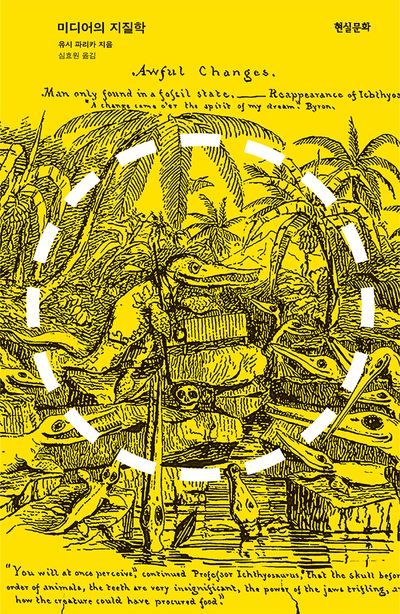
Jussi Parikka, A Geology of Media
Jussi Parikka’s A Geology of Media, which I read recently, offers a useful bridge from these conceptual questions to the materiality of the planet. Media are not simply abstract signs on a screen. They are material extensions of the earth’s minerals and metals.
Parikka also addresses the politics of mining, labor, and waste. Reading him made me want to ask more concrete questions about today’s AI electricity grids, cooling systems, supply chains, and on-site labor. Even the most advanced algorithm cannot operate without these material foundations.
Above all, rare earths, oil, coal, and solar panels produced in China are more than the ingredients of media. They are political realities that shape national survival, control supply chains, and become weapons in less visible resource conflicts.
Defining the concepts: the silence of Tacitum and a narrower sense of affect
At this point I need a clearer, three-part framework for thinking about existence, technology, and the body. This requires revisiting both the meanings of affect and the reasoning behind my proposed term, Tacitum.
Affect means different things in different disciplines. The Latin affectus can refer to a state, disposition, or emotion; it cannot easily be reduced to the idea of contact leaving a trace. Here I want to use affect in a deliberately limited sense: a relational event arising when a human body encounters a thing.

Photograph by Michael Hindman
In the photograph above, nature simply exists, while the photographer captures its appearance.
1. Nature in itself: Tacitum
Nature does not require contact with another being or capture by an outside observer. It exists fully in itself, without a human gaze or stimulus. In my practice, forcing affect, with its assumptions of contact, representation, and response, onto nature untouched by humans feels like an anthropocentric interpretation.
To describe nature’s horizon of quiet existence before human contact or the assignment of meaning, I propose Tacitum, or 묵재 (默在). The Korean name combines 默, silence, with 在, being or existence. It names what I feel the word affect cannot adequately describe.
I give the name Tacitum to nature that exists before human contact. This distinction is a proposal for developing my work, rather than a definition that follows inevitably from the etymology of affect.
The spelling Tacitum draws on the Latin tacēre, to be silent, and tacitus, silent or unspoken. Tacitum is also the neuter form of tacitus. Rather than inventing a new Latin ending, I am assigning a meaning from my practice to an existing form.
Tacitum means a reality that quietly exists in itself without external contact, linguistic naming, or an observer’s contemplation. Within this framework, it stands against affectus, the affect arising through a human encounter, and names nature’s indifferent, complete self-sufficiency before human intervention.
2. The human-mediated domain: affect and the trap of drawing a boundary
In the restricted sense I am proposing, affect is an event in which contact leaves a trace. It emerges where a human being and a thing meet. It is not an original property of nature, but a relational disturbance or field produced as human bodies and technologies touch, handle, and transform natural things into artifacts.
A branch lying beside a road is simply Tacitum within this framework. But once someone carries it every day, leaves the marks of their hands on it, and makes it an extension of their body, it is remade as an artifact and acquires a dense affective relationship.
One might ask whether the violent physical and ecological encounters among animals and plants, including predation, are also affect. Within my proposed distinction, nature encountering nature without human intervention remains in the domain of Tacitum. I reserve affect here for the particular event in which humans and their technologies become entangled with natural things.
This distinction could be criticized for drawing a firm boundary between humans and nature, only to return to another form of anthropocentrism. My intention, however, is not to interpret nature around the human. I want to question the human-centered assumptions I hear in the word affect, and return nature to being in itself rather than treating it as a convenient object of resonance. The purpose of Tacitum is to loosen the civilizational arrogance that cannot leave nature alone and continually draws it into human language.
Five terms for a politics of the earth: a technological ecology grounded in material conditions
If, like Donna Haraway’s cyborg, we face the earth through technologically mediated bodies, cities, and screens, we need words that reach beyond the private domain of affect. I propose five terms for attending to material conditions on the ground.
Geo-Hierarchy: the political hierarchies through which resources and minerals become determinants of international power and class relations at sites of labor, rather than remaining mere materials.
Material Dynamics: the physical and technological forces through which rare earths, electricity, and material devices actually change the world, beyond an emotional sense of resonance.
Geo-Entanglement: the pathways through which Chinese solar panels, rare-earth mining in Africa, and labor in AI server rooms become entangled with the weapons of global politics.
Resource Agency: the physical capacity of minerals and energy to precipitate major political and economic events, beyond the intentions of human consciousness.
Material Nexus: the structure that reveals how even supposedly virtual AI depends at every moment on physical supports, from coal associated with the nineteenth century to the rare earths of the twenty-first.
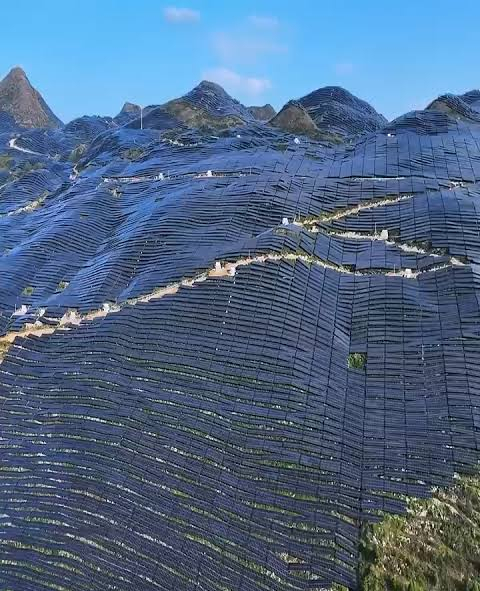
Solar panels covering mountains in China
Artificial layers and the paradoxical coexistence of technology and Tacitum
In its original condition, nature as Tacitum would be self-sufficient in silence. Yet as humans mine, process, and mediate it, that nature begins to speak through human contact and affect, in the violent forms of climate crisis and resource conflict.
What kind of technology should we seek in the face of this voice of a nature that has lost its silence?
I cannot give a firm answer. Perhaps this is the next thought: human technology continually layers natural things into artifacts through chains of affect. As these artificial layers grow denser, the earth moves further from its original Tacitum.
But a technology that takes us further from Tacitum is not necessarily a bad technology. This is the interesting paradox. Sometimes an intensely artificial technological layer, apparently farthest from Tacitum, may help preserve and protect the earth as Tacitum.
Beneath AI’s smooth screen there are more than abstract algorithms. There are layers of resource diplomacy, agreements on technical standards, computer science, data mining, and the mining technologies that pull minerals from deep underground.
To understand and direct this enormous artificial ecosystem of AI and technology, and to respond to nature’s voice, we need to look beyond the illusion of the screen to the material layers beneath it. The paradoxical coexistence of technology and Tacitum, built by technologically mediated bodies upon the earth, is the language I want to develop for life in the age of AI.
This line of thought began in mid-July when another artist asked whether I understood affect differently from the author of The Spell of the Sensuous. The question stayed with me for almost three weeks. I finally felt some satisfaction when it led me to coin a term of my own.
The scope of these concepts
Other theories extend affect to nonhuman relations. The distinctions here are the artist’s proposal. Parikka’s book also addresses both materials and labor processes.
Related reading
The Spell of the Sensuous (Korean essay in preparation) · Media Theory from the Ground (Korean essay in preparation)
Essays linking here 0
No published essays link here yet.