The First Days in Space: What Artemis II Set in Motion, Part 2
From launch and the first manual maneuvers to life aboard Orion, a look at Artemis II’s early flight and Korea’s K-RadCube.
Who this is for
For readers curious about piloting a Moon-bound spacecraft, life aboard it, and Korea’s participation in the mission.
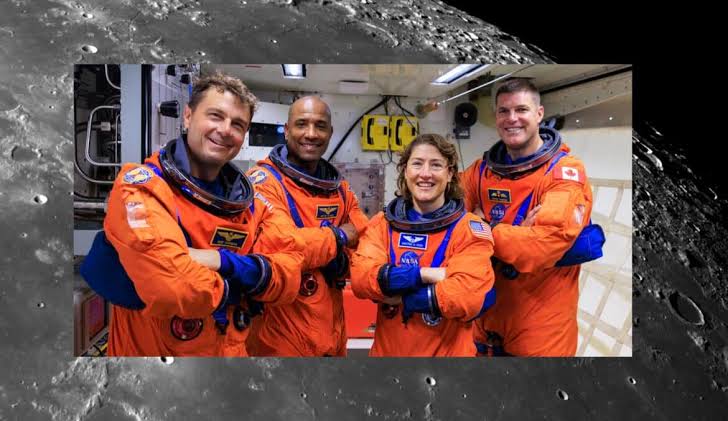
The crew of Artemis II
At 7:35 a.m. Korean time on April 2, SLS lifted off carrying Orion. About eight minutes later, its main engines shut down. Maneuvers by the upper stage then placed Orion in a high elliptical Earth orbit. Earth was outside the window. The real test was beginning.
The first eight minutes: the physics after liftoff
About eight minutes pass between SLS ignition and main engine cutoff. To remain in orbit, a spacecraft needs enough horizontal speed for its altitude. In low Earth orbit, that is roughly 28,000 km/h.
Orion’s four Solar Array Wings deployed in sequence after launch. Once the flight team in Houston received confirmation, Orion could generate its own electrical power. Koch and Hansen unfastened their restraints and began checking life support, including the water supply, fire-response masks, and the toilet.
Making sure the toilet works in space: that is one of the first tasks after 8.8 million pounds of thrust disappear. The reality of deep-space exploration is that concrete.
The first stages
Main engine cutoff comes about eight minutes after launch. Checks in high Earth orbit precede the translunar injection burn approximately 25 hours after liftoff.
Proximity operations: taking the spacecraft for a test drive
About three hours and twenty-four minutes into the flight, Orion separated from the Interim Cryogenic Propulsion Stage, or ICPS. The spent upper stage was, in effect, an empty fuel container. NASA used it as a target rather than simply leaving it behind.
Pilot Glover and commander Wiseman manually maneuvered Orion around the spent stage for approximately 75 minutes, approaching to within ten meters. This was the Proximity Operations Demonstration, designed to assess the spacecraft’s manual handling.
The crew directly tested how the spacecraft responded and performed. Like taking a new car for a test drive, it was a chance to learn its handling in actual flight.
These maneuvers help prepare for docking on later missions. Under the revised program, Artemis III targets a 2027 demonstration of docking between Orion and commercial lunar landers in low Earth orbit. Practicing around a spent rocket stage is part of that preparation.
The Van Allen belts: an invisible barrier
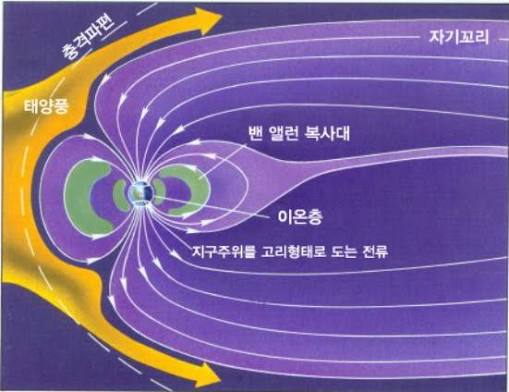
As Orion climbs through its elliptical orbit, it passes through the Van Allen radiation belts. These regions surrounding Earth are filled with high-energy protons and electrons trapped by the planet’s magnetic field. The ISS orbits at roughly 400 km, below the principal radiation belts.
Artemis II crosses this barrier on its way to the Moon. Crew radiation exposure during the crossing is among the measurements NASA watches closely. Understanding such exposure is also necessary for planning longer journeys toward Mars.
TLI: the decisive departure
Approximately twenty-five and a half hours after launch came one of the mission’s most decisive moments. Orion’s European Service Module engine fired for five minutes and fifty seconds. This was TLI, or translunar injection.
The burn placed Orion on a free-return path toward the Moon. Lunar gravity would bend the path back toward Earth, but that did not eliminate the need for trajectory corrections and preparations for the return.
After TLI, an immediate return to Earth becomes much harder. Maintaining the planned return path and managing the spacecraft’s condition make this an important threshold for the crew as well.
Four days to the Moon: a floating laboratory
After TLI, Orion coasts toward the Moon for approximately four days. It needs only limited engine use along the way. Newton’s laws do most of the remaining work.
These four days are more than travel time. The crew practices emergency spacesuit procedures and reviews plans for observing the lunar surface. The AVATAR experiment also carries organ chips made with cells from crew members to study the effects of the space environment. Analysis compares these samples with controls on the ground.
For four days, Earth grows smaller outside the window. Imagining four people crossing the wide space between Earth and the Moon unsettles my ordinary sense of distance.
Lagrange points
T+
3h 24m
ICPS separation and the start of proximity operations
Orion separates from the upper stage. A manual maneuvering demonstration lasts approximately 75 minutes, with an approach to within ten meters.
T+
~5h
Four CubeSats deployed; K-RadCube begins independent flight
CubeSats from Argentina, Germany, Saudi Arabia, and South Korea were deployed. K-RadCube began independent flight, but receiving normal observation data proved difficult.
T+
~25.5h
TLI burn: departure for the Moon
The main engine fires for roughly six minutes to enter the lunar transfer path, followed by approximately four days of travel.
Flight days
3–6
Deep-space coasting and onboard experiments
Scientific work includes the AVATAR experiment, emergency spacesuit practice, and final preparation for lunar observations.
European life support and Korean radiation measurements
Several countries contribute to this mission. ESA supplies the European Service Module, responsible for air, water, electricity, and propulsion. Canadian astronaut Hansen is aboard, and Korea’s K-RadCube launches alongside the mission. The Artemis Accords set out principles for participating countries’ space activities; they are distinct from a legally binding international treaty.
South Korea is a signatory to the Artemis Accords. K-RadCube is an attempt to gather radiation data useful for deep-space exploration, but a successful launch must be distinguished from successful observations. In its April 3 announcement, the Korea AeroSpace Administration reported abnormal status information and continuing attempts to establish normal communications.
Launch and observation Satellite separation, normal communications, and successful observations are different milestones.
🇰🇷 Korean Connection
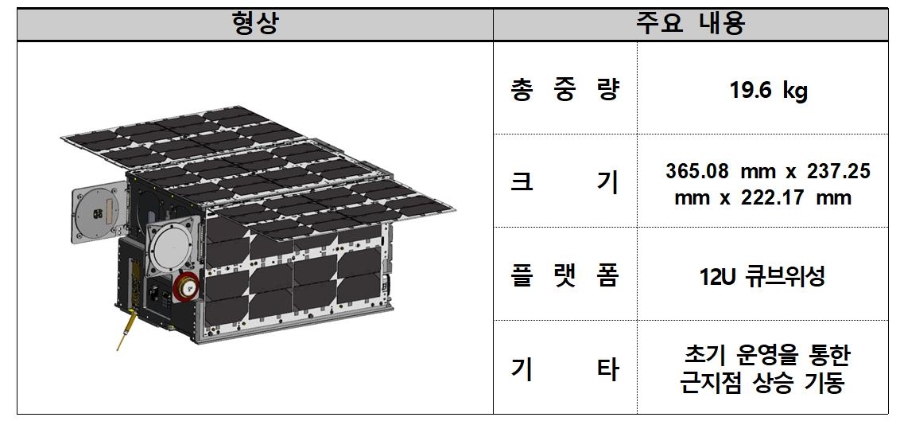
K-RadCube: a Korean CubeSat designed to measure the Van Allen belts
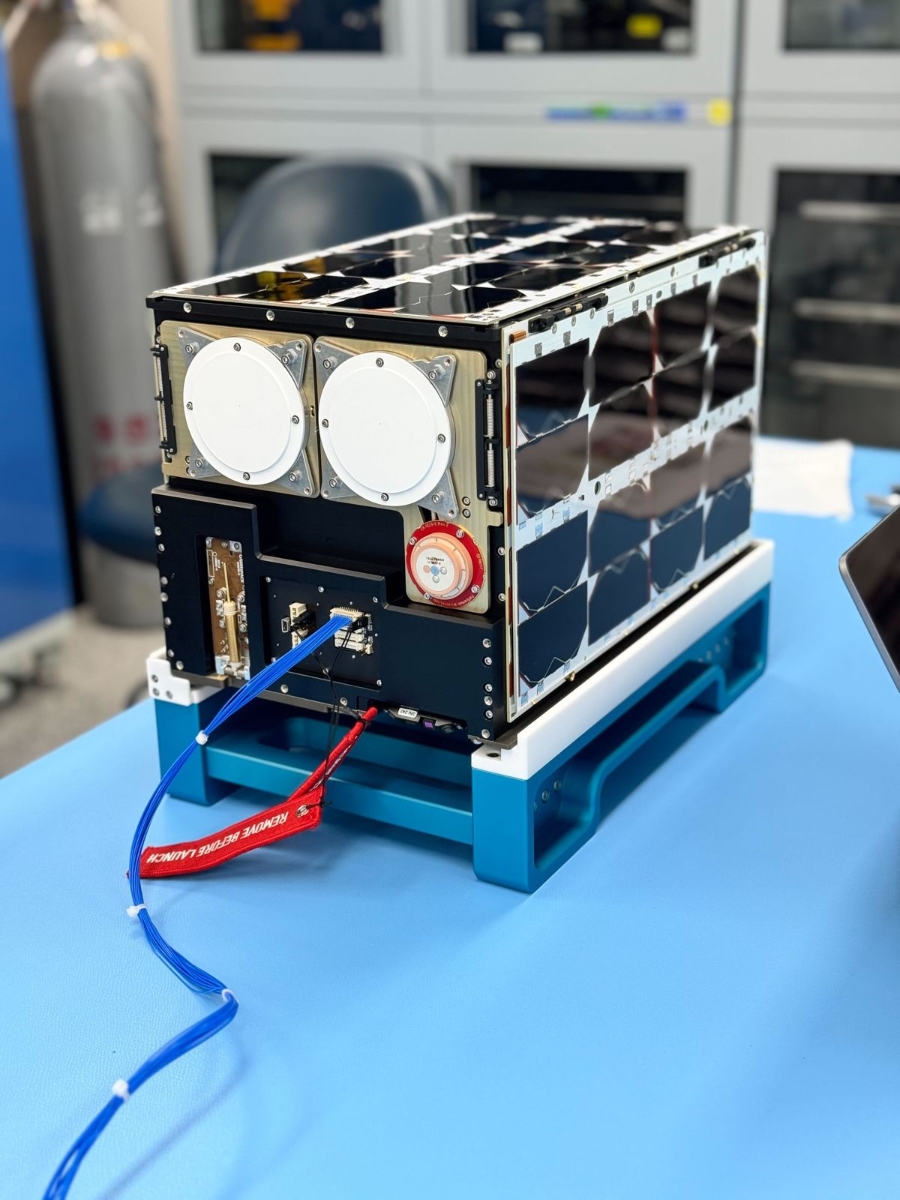
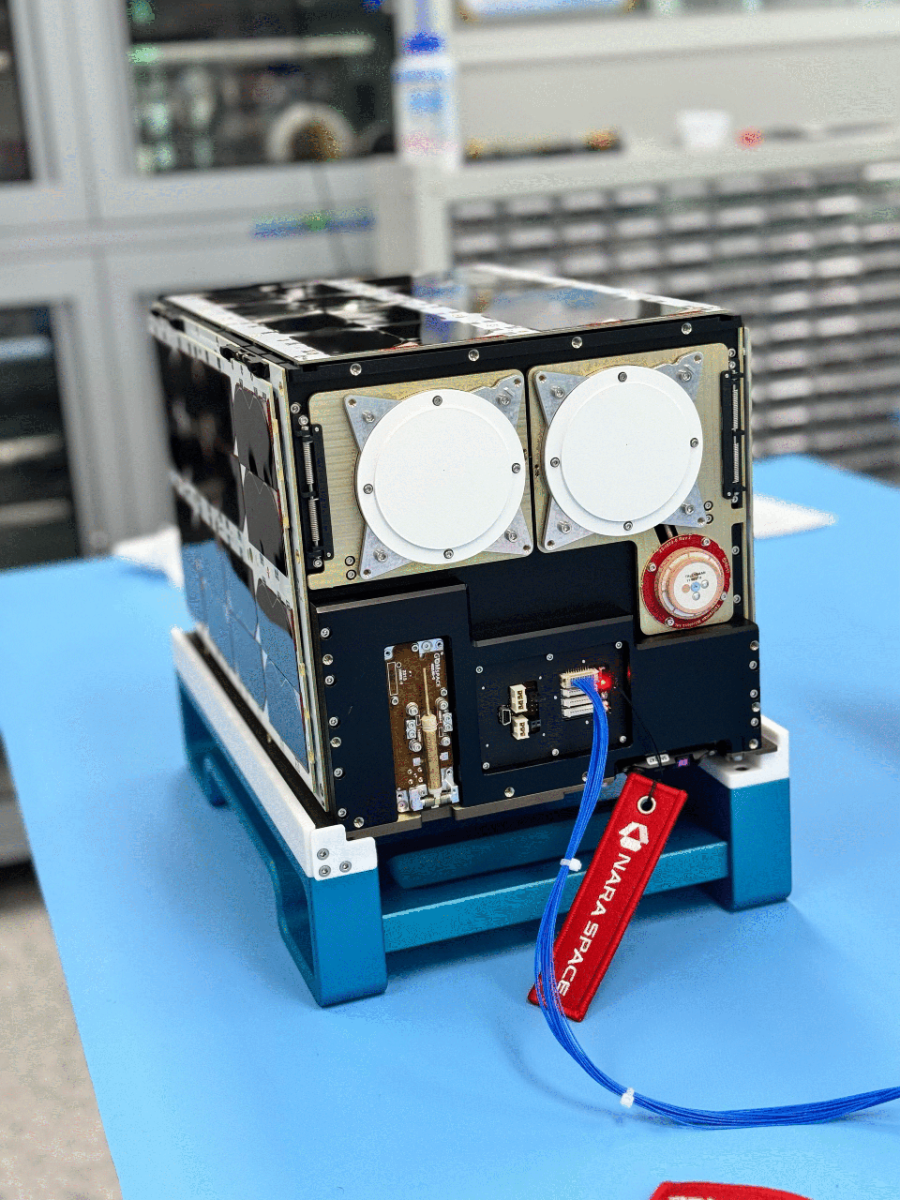
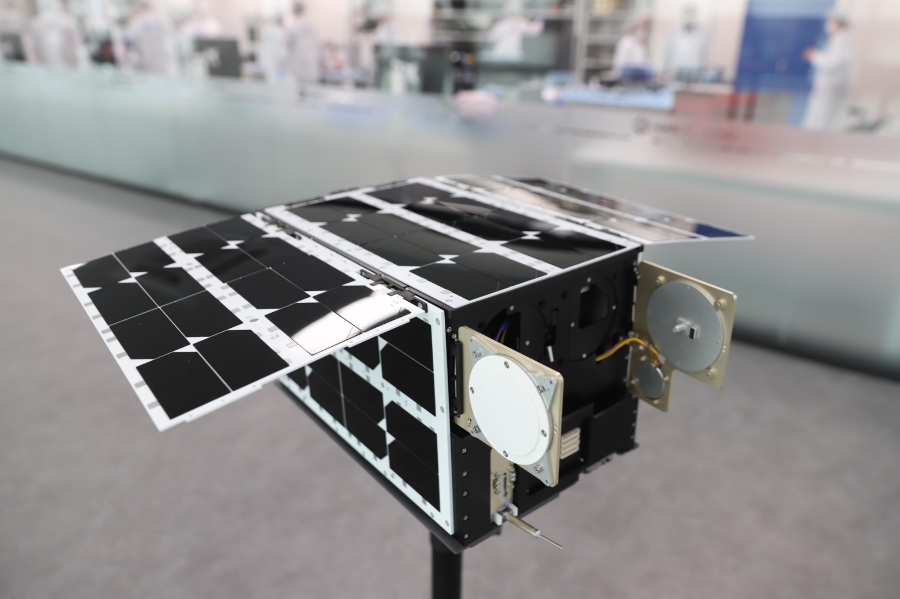
Artemis II carries K-RadCube, developed by the Korea Astronomy and Space Science Institute, or KASI. This shoebox-sized satellite is deployed after Orion separates from the ICPS.
K-RadCube was designed to measure space radiation at different altitudes. A dosimeter using material that simulates human tissue was intended to help study radiation effects on astronauts. These observation goals should not be mistaken for results already achieved.
Nara Space Technology developed the satellite bus, and KT SAT participated in ground-station operations. The mission also aimed to test Korean semiconductor components in a high-orbit radiation environment. Since the Korean lunar orbiter Danuri had already traveled from Earth to the Moon, describing K-RadCube as the first Korean satellite to cross the Van Allen belts would be inaccurate.
KASI, Nara Space Technology, KT SAT, Samsung Electronics semiconductors, and SK hynix semiconductors
A further note
K-RadCube launched with Artemis II at 7:35 a.m. Korean time on April 2 and separated at 12:58 p.m. that day, at an altitude of approximately 40,000 km. KASA then attempted initial contact using overseas ground-station antennas.
The first signal was detected at the Maspalomas ground station in Spain at around 2:30 p.m. Korean time on April 2. At 9:57 p.m. the same day, a ground station in Hawaii received abnormal telemetry from the satellite. Telemetry reports a satellite’s condition; the expected data were not arriving normally.
Artemis II series, Part 2 | April 4, 2026
Next: The Far Side of the Moon.
References
NASA: Artemis II’s translunar injection
KASA: K-RadCube communications status (in Korean)
Further material included in the original essay
Chosun Biz: K-RadCube aboard Artemis II fails to establish normal communications (in Korean).
Continue reading
Returning After 54 Years: What Artemis II Set in Motion, Part 1
Losing Sight of Earth on the Far Side: What Artemis II Set in Motion, Part 3 (Korean essay in preparation)