Thirst, Part 2: Desire, Choice, and the Good Samaritan
Sang-hyun and Tae-ju’s desires leave questions at the boundary between good and evil. What remains of an ethical choice when desire seems to come first?
Who this essay is for
Readers who have seen the film and want to consider another interpretation and its background. This essay contains spoilers for the plot and ending.
Those left with guilt
Thirst draws on Émile Zola’s Thérèse Raquin. This connection appears in the guilt that torments the characters in the middle of the film. Sang-hyun’s body has become a vampire’s, but his mind remains human; Tae-ju is still physically human as well. Their visions of the dead Kang-woo end when Tae-ju becomes a vampire. Perhaps they have escaped human original sin, or perhaps they are now made entirely of sin. Either way, they can seem like bodies of pure desire. Earlier, I suggested that desire existed before the original sin of eating the forbidden fruit. I also questioned free will, while wondering whether desire might somehow escape a fatalistic or deterministic account. Is the director suggesting that desire is good, or even innocent?
This essay retains the perspective and tone of my original response to the film. Connections not established as the director’s intention should be read as my interpretation.
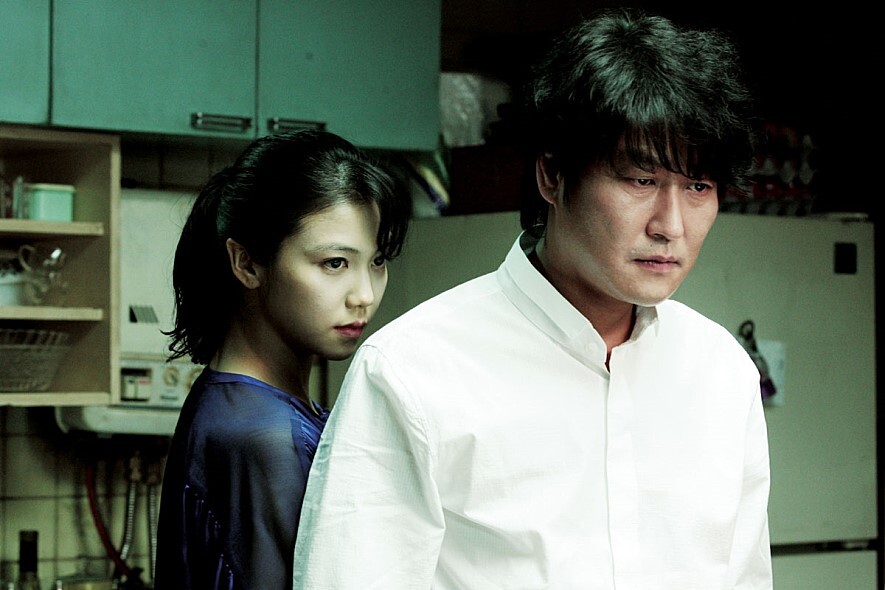
Tae-ju and Sang-hyun in Thirst
Temptation and desire
For me, the scene of the forbidden fruit placed before Adam and Eve raises a question about temptation and choice.
The serpent raises the same question. If God knows everything, he cannot be unaware of what kind of creature the serpent is. Temptation is already present.
The serpent uses Adam and Eve’s desire to become closer to God to persuade them to eat the fruit of the knowledge of good and evil.
Following that desire, they eat the fruit and commit the original sin.
If we see this sin as part of God’s plan, Adam and Eve’s desire, and the choice it produces, seem to be the most uncertain variables in the arrangement. Through their desire, they become pieces on a board already designed for them.
The problem of choice
By desire, I do not mean only sexual desire or appetite. I also mean the wish to step outside a prescribed order. I want to ask how the film sees that wish.
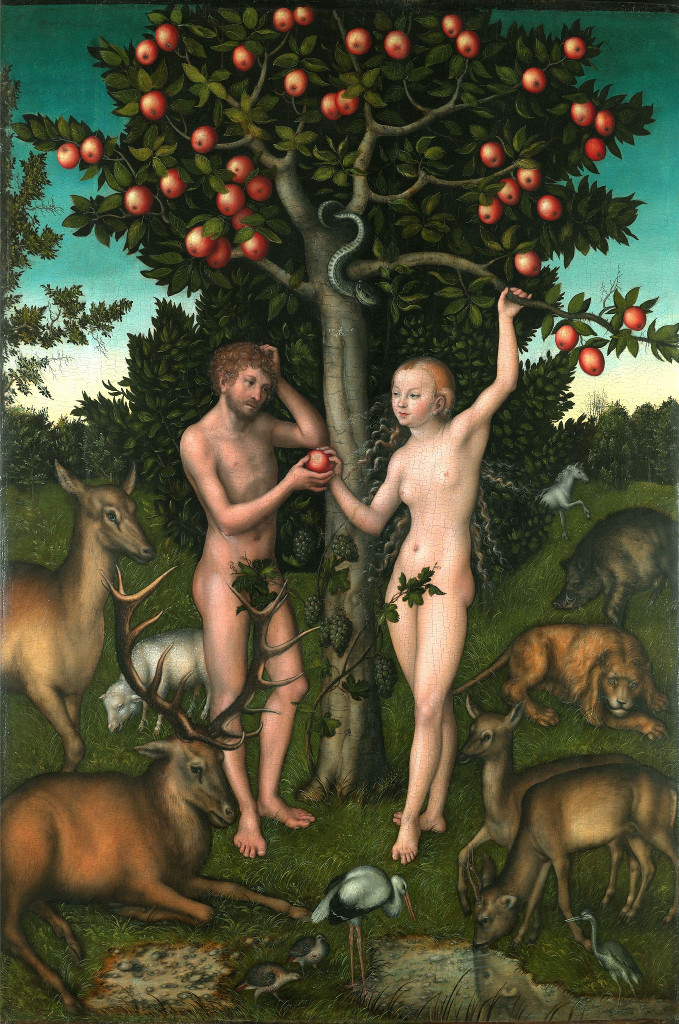
Lucas Cranach the Elder (1472–1553), Adam and Eve (1526)
Thirst, Hellsing, and Outer Wilds made me think about human free will and desire. I do not mean that quantum mechanics can prove anything about them. What if Sang-hyun had taken another path? I read the shoes he gives Tae-ju, and the same shoes left at the end, as a symbol of choice. But I am still unsure whether love and good deeds can all be explained by that single word, desire.
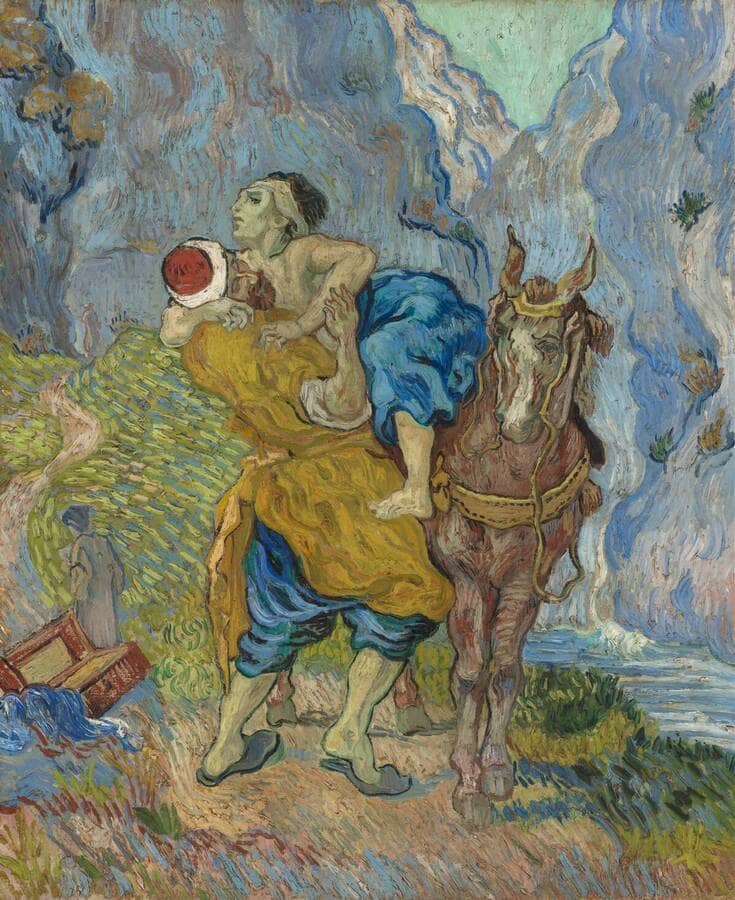
Vincent van Gogh (1853–1890), The Good Samaritan
Thinking of the Good Samaritan
The parable of the Good Samaritan appears in Luke 10:30–37. It asks who helped a stranger. I read Evelyn, the character from the Philippines in Thirst, in relation to this parable. This is not an explanation confirmed as the director’s intention. Nor am I suggesting that all modern law came directly from the Ten Commandments. My concern here is the impulse to help another person beyond a legal obligation.

Evelyn in the film, at the far left
The ethics that remain at the end
While others harass and belittle Tae-ju, Evelyn treats her kindly as a friend. Tae-ju cannot bring herself to kill her. In my reading, Sang-hyun, who acts as a representative of God both as a priest and as the most powerful vampire, spares Evelyn as the Good Samaritan. Among the supporting characters, Evelyn and the mother survive while others die. The victims, as the film presents them, are not simply innocent figures.
Within fate, we repeatedly arrive at choices pulled by desire. Perhaps what allows the most humane choice at those moments is a decision grounded in human morality. I wonder whether this is one of the messages the director wanted to leave with the film.